


In 2014, a small group of whitewater paddlers founded SPADE Kayaks to build whitewater boats according to their own vision. A path that would prove not always easy..
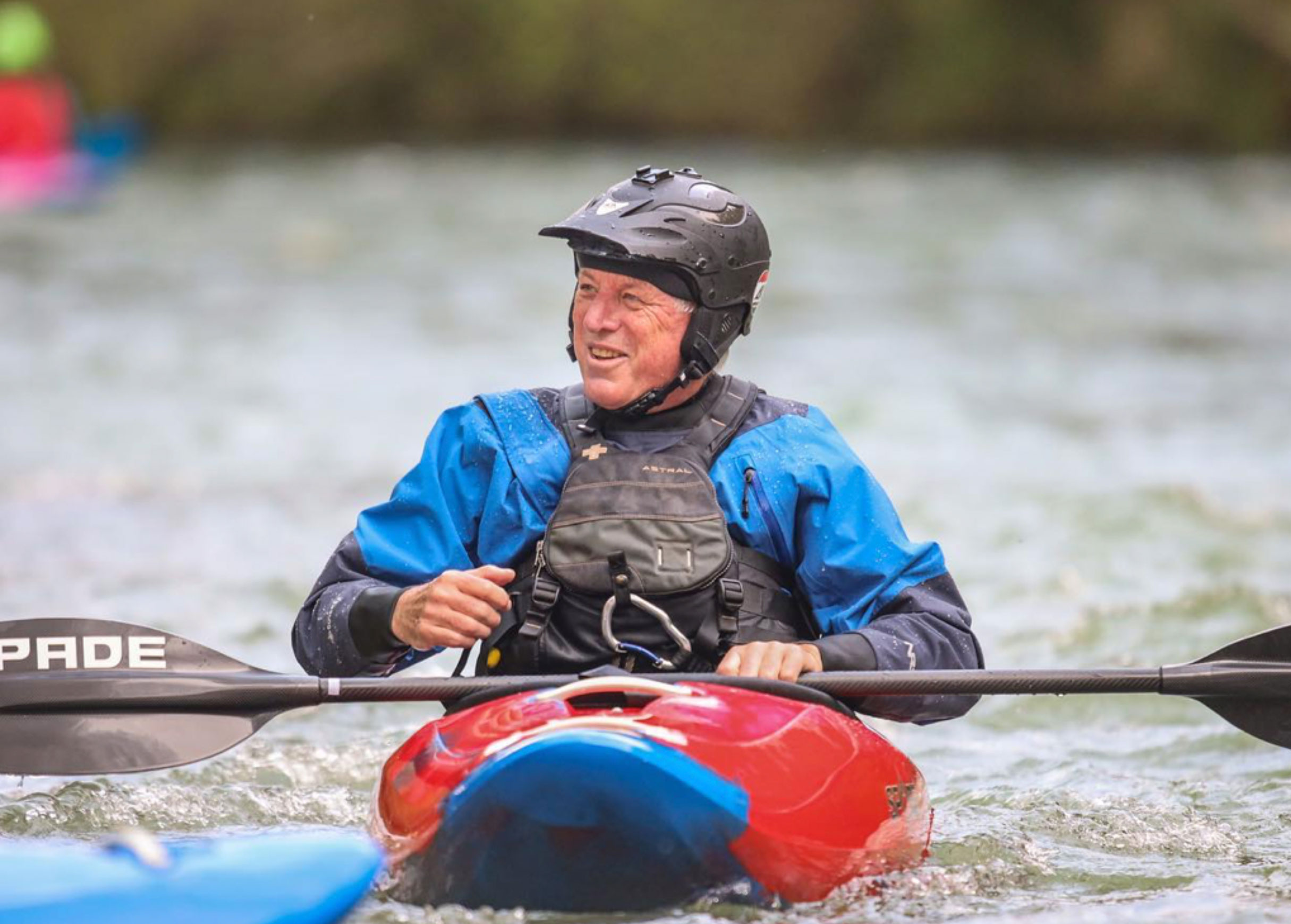
To understand Spade Kayaks, one must first understand Hans Mayer . Mayer, born in 1957, has left many traces in the European whitewater scene, often without most paddlers knowing his name. A "White Water Legend" as a young entrepreneur.
Initially working in sales for other kayak companies, Mayer founded his own kayak shop, "La Ola," near Rosenheim in 1994. It soon gained nationwide attention in Germany for its fresh T-shirt designs and mail-order business. Through the distribution of Necky Kayaks and his irrepressible desire to "make kayaking cool," as he puts it, he soon gathered a young, active scene around him. Whether as the organizer of the notorious Lofer Rodeo, as the publisher of "Paddle Power Magazine," or with La Ola Verlag, Hans Mayer loves to initiate things. He enabled Olli Grau's textbook series, motivated Olaf Obsommer to create the first Sick Line film, and at 50, he competed in the adidas Sick Line World Championships. "Just for fun," as he says himself.
"Working with Hans is probably not always easy."
"He has so many ideas, it's hard to keep up," chuckles Jens Klatt, who has known Mayer since the nineties. "Without Hans, Olaf and I would never have created our Norway book. Without that book, adidas would never have noticed us. And without adidas, there would be no 10 years of Sick Line races in the Ötztal."

It's therefore no surprise that Mayer finally realized his long-cherished dream of building his own whitewater kayaks in 2014.
To do this, he brought in reinforcements, amassing over a hundred years of whitewater experience: Olli Grau, 1995 Rodeo World Champion, renowned kayak instructor, and author. Matze Brustmann, former member of the Freestyle National Team, extreme paddler, and namesake of "Matzes Drop" in Norway, also a kayak instructor and musician. Jan Haluszka, industrial design engineer specializing in 3D animation and plastics technology, also a paddler since the age of six. Finally, Jens Klatt – photographer, filmmaker, and graphic designer – who, by his own admission, knows little about boat design, but spent years exploring new territory with Olaf Obsommer in Norway and therefore knows very well what he expects from a whitewater kayak.
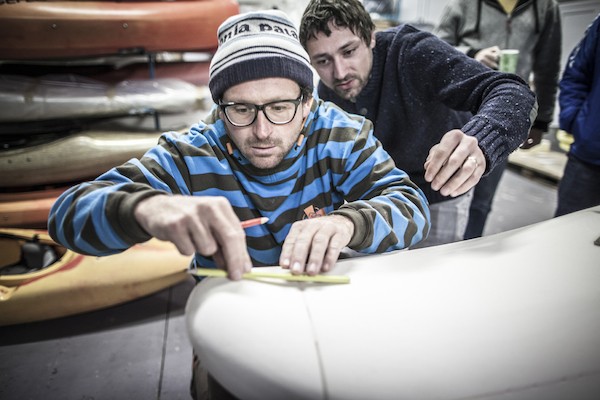
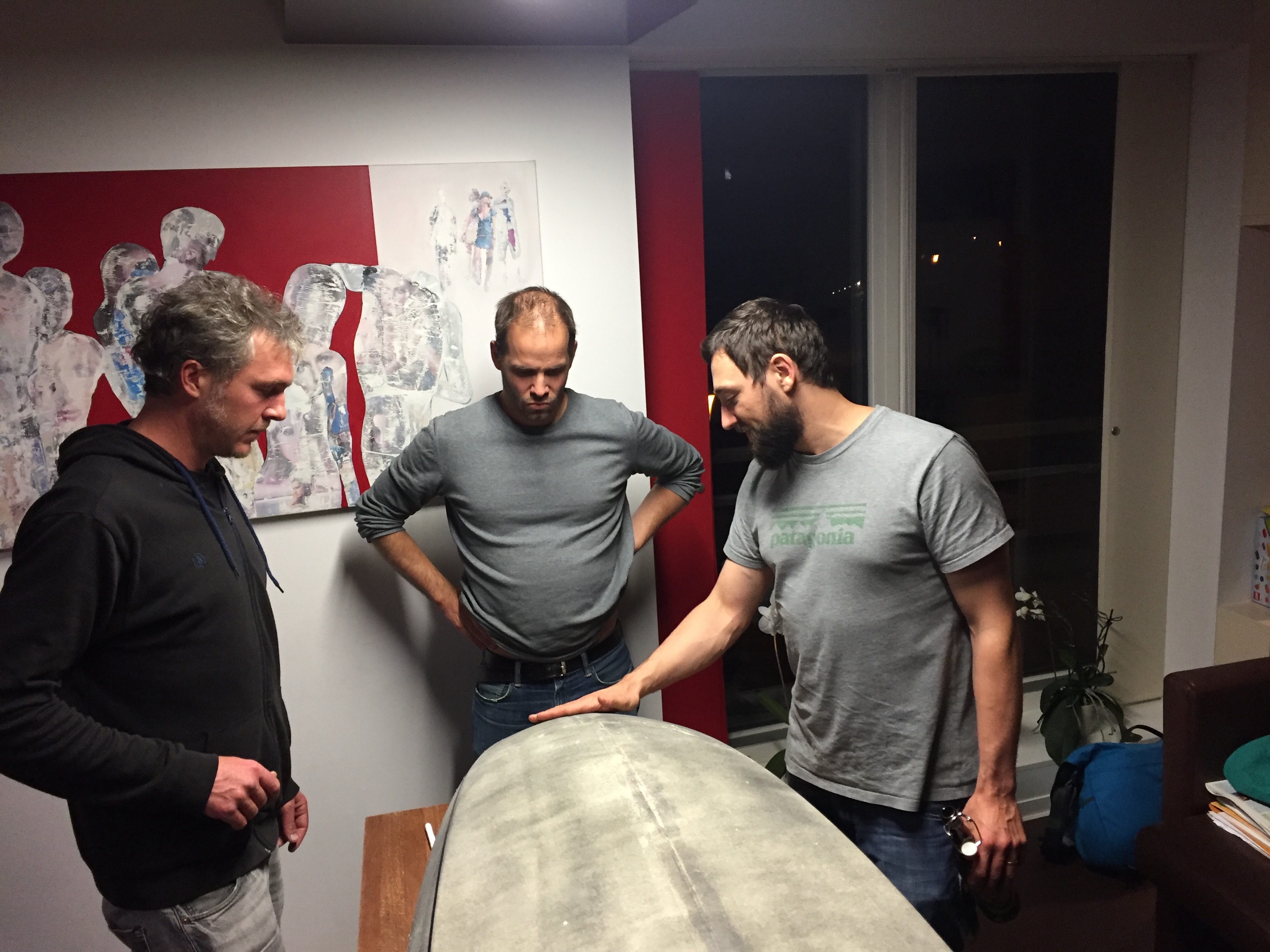
Initial prototypes were shaped in Olli Grau's garage in Nußdorf, refined in Haluszka's workshop in Munich, outfitting designs were created, and names and logos for the new company were discussed. Whitewater sports are known for attracting strong-willed individuals, and the idea of an egalitarian company culture also reached its limits: “We sometimes debated minor details in endless video calls late into the night. It pushed us to our limits, as most of us were doing this on the side after the kids were in bed,” recalls Jens Klatt.

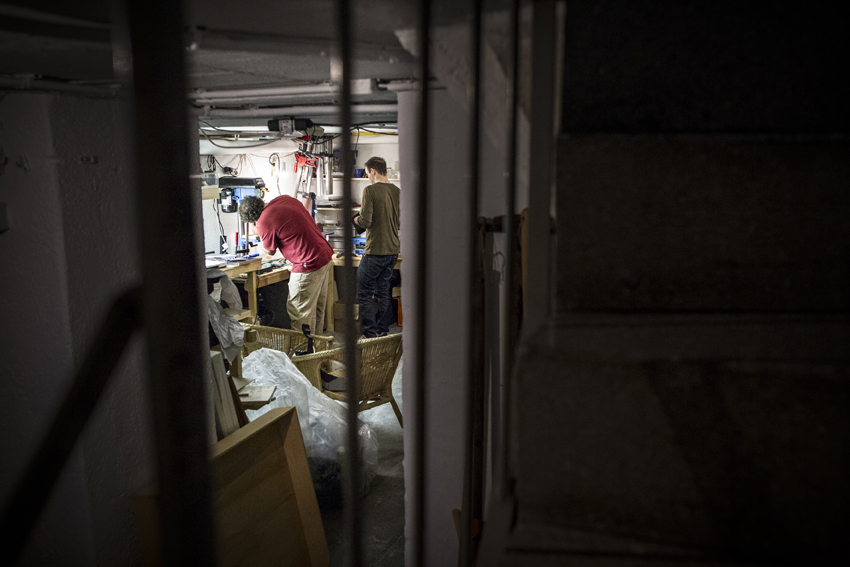
Whitewater sports are known for attracting strong-minded individuals, and even the idea of an egalitarian company culture has its limits.
"Nothing requires more order than anarchy!" adds Jan Haluszka, who launched his first own boat at just 19 and had also worked for other canoe manufacturers. Haluszka specializes in 3D computer design and spent almost 2 years working with BASF on a new, lightweight material.

"Working as a team was exhausting, but also incredibly fruitful. Olli, for example, has an incredibly analytical approach, which greatly helped in translating his whitewater experience and demands into a 3D model."

But then came the first setback: Of all things, there were production problems with the very first model, the Ace of Spades. Unlike most kayaks on the whitewater market, the Ace of Spades is manufactured using the blow-molding process. This has advantages, but also carries risks compared to the rotational molding process, or roto-molding.

The raw material for both processes is the same: polyethylene. The difference in the final product lies in the molecular chain length: blow-molding results in longer molecular chains, making it stiffer and tougher, explains Jan Haluszka. "In blow-molding, the material is pressed into the mold by high pressure, while in rotational molding, the heated material is distributed by a rotating movement of the mold. Because the material has to flow, it has shorter molecular chains, and its tear resistance is not as high."

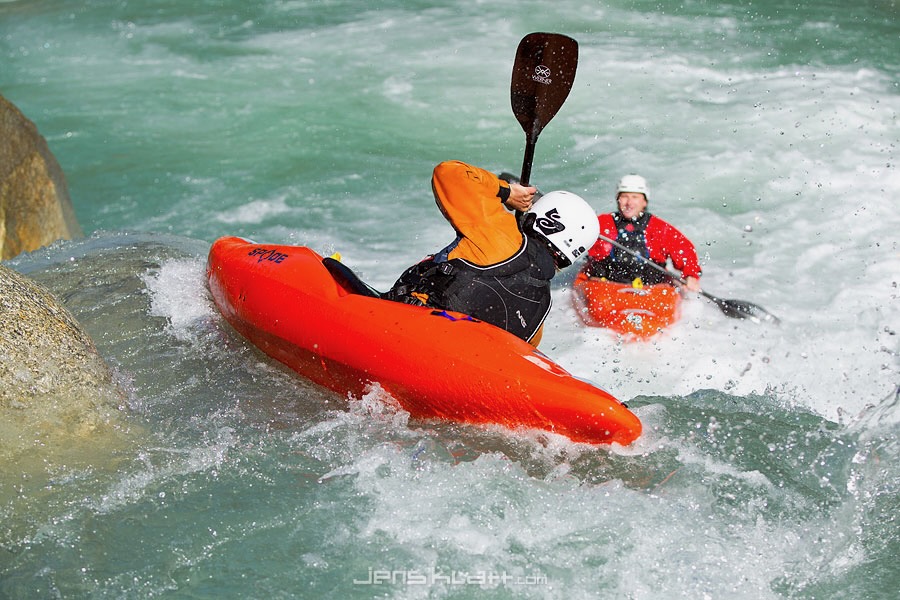
But blow-molded boats also have weaknesses, Hans Mayer reveals. “The Ace almost broke us; some boats from the first production run had coaming rims that were too thin. The energy and costs incurred from exchanges and complaints set us back years.” And this was despite the production company being confident that the design was easily implementable.
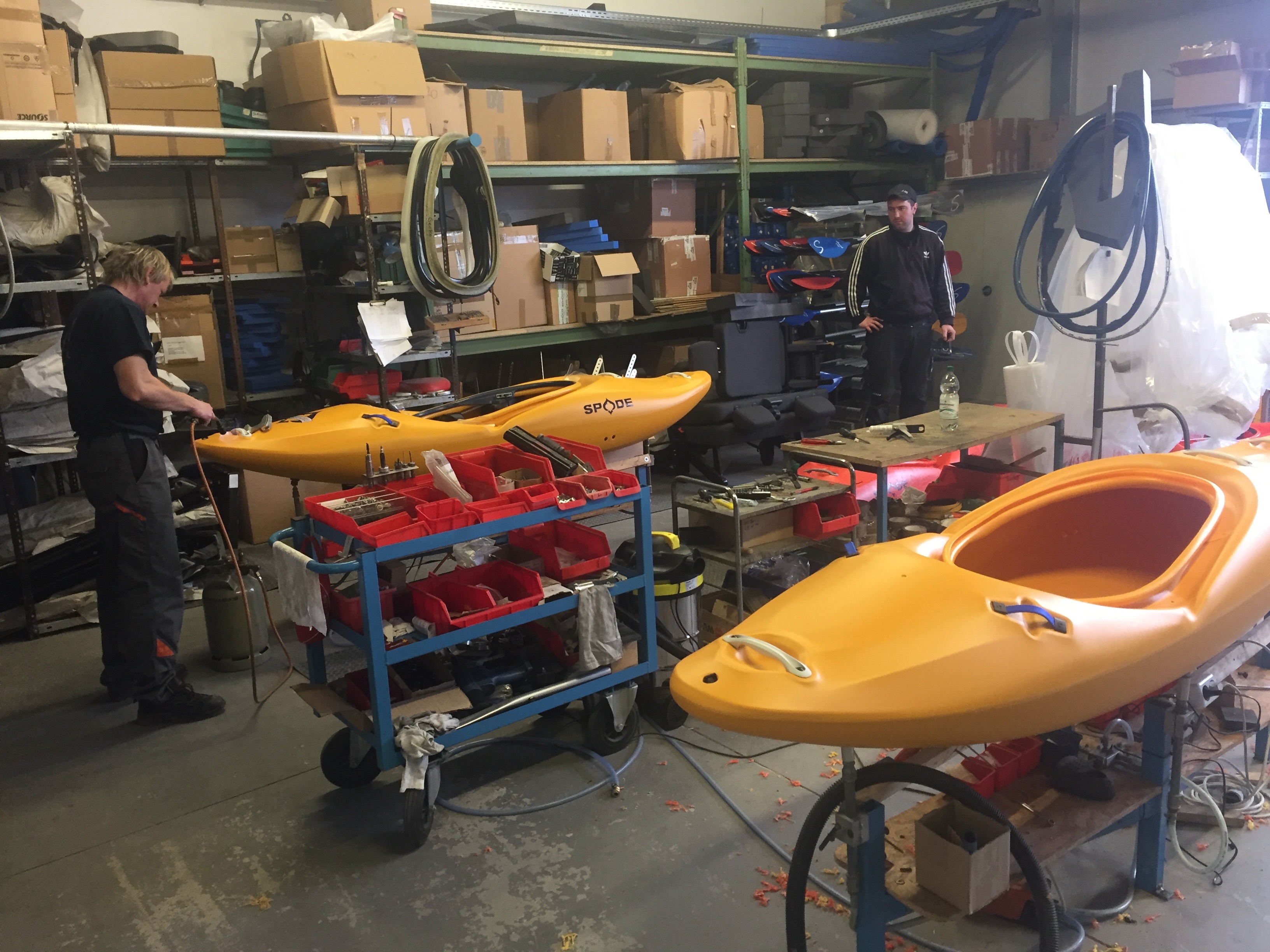
Another disadvantage of the blow-molding process: the molds and manufacturing are extremely expensive. “We had to realize that the kayak market wasn't willing to pay a higher price, and we simply couldn't afford another blow-molded model,” says Hans Mayer. Therefore, Spade Kayaks, like most manufacturers, now relies on the rotational molding process.
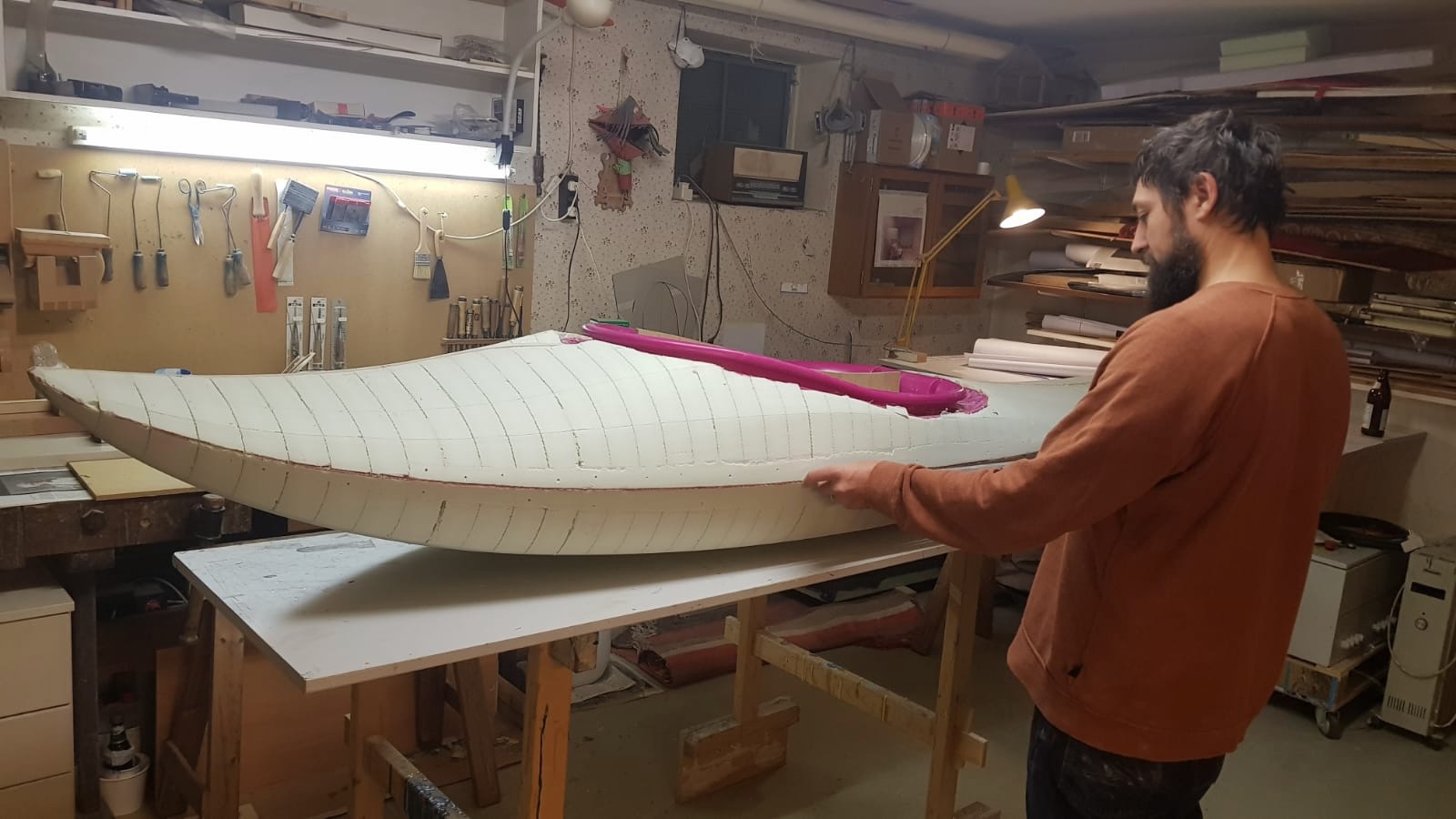
When a few paddle-enthusiast friends start a company, the initial capital is naturally not very high. Building their own production facility, as is common with established kayak companies, was never really on the table for Spade. "We wanted to focus on what we do best: designing boats, marketing them, and organizing distribution," says Jens Klatt, who is responsible for Spade's public image. In the SUP, ski, or bicycle markets, external producers are the norm, with many products manufactured in Asia. Nevertheless, production in Germany and Europe was always important for Spade. "Production in Asia is certainly cheaper, but we would have had too little influence over it simply due to the distance," adds Olli Grau.
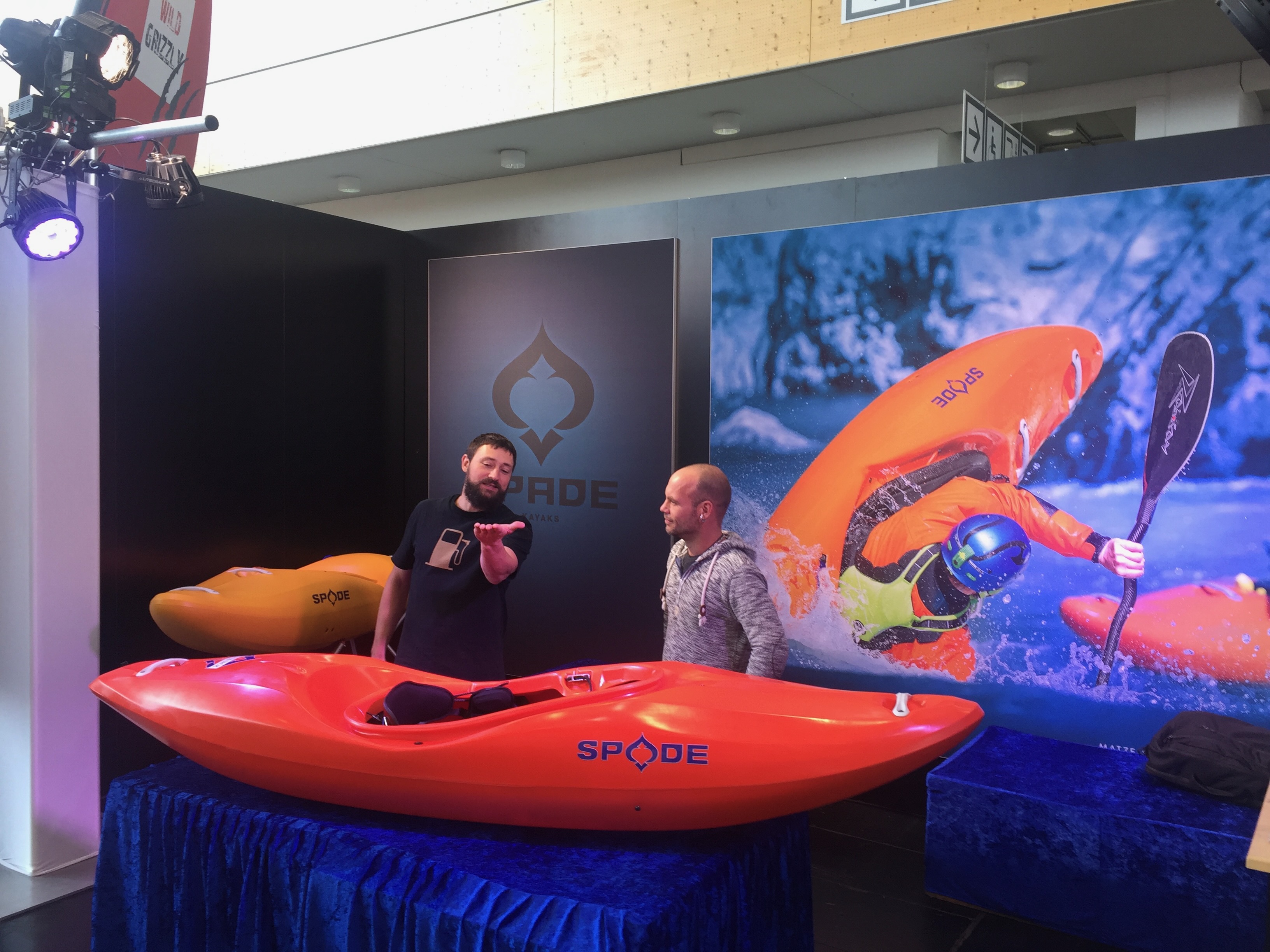
So what's Spade's recipe for a high-performing whitewater boat? "It's actually quite simple," says Matze Brustmann. "A good boat should never get in the way. It should allow the paddler to do everything they want to do on the river. The boat shouldn't be an obstacle."
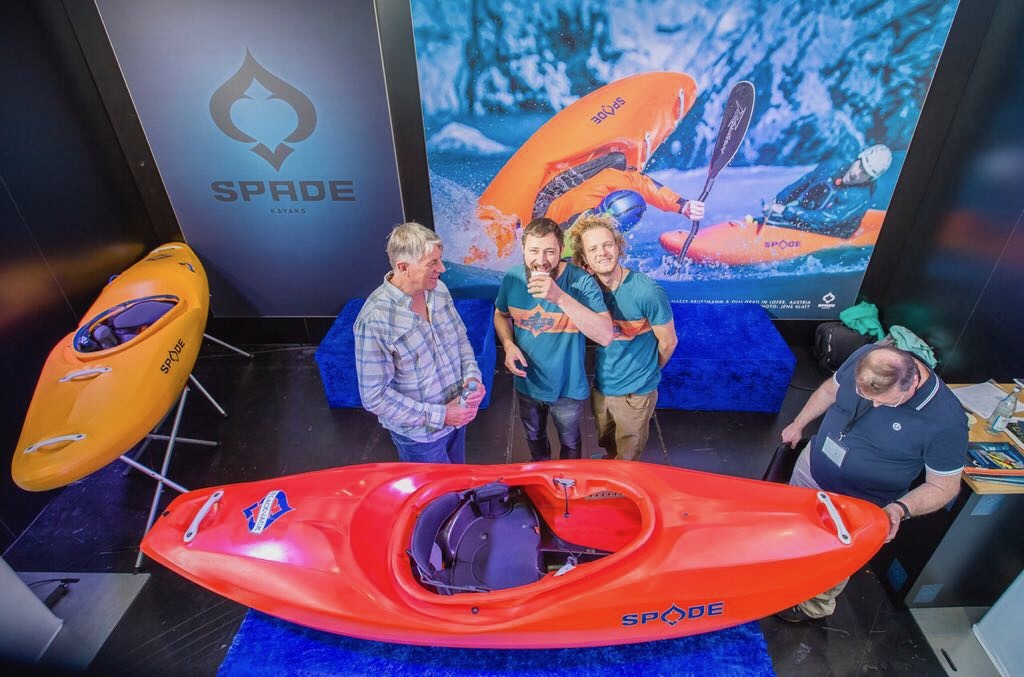
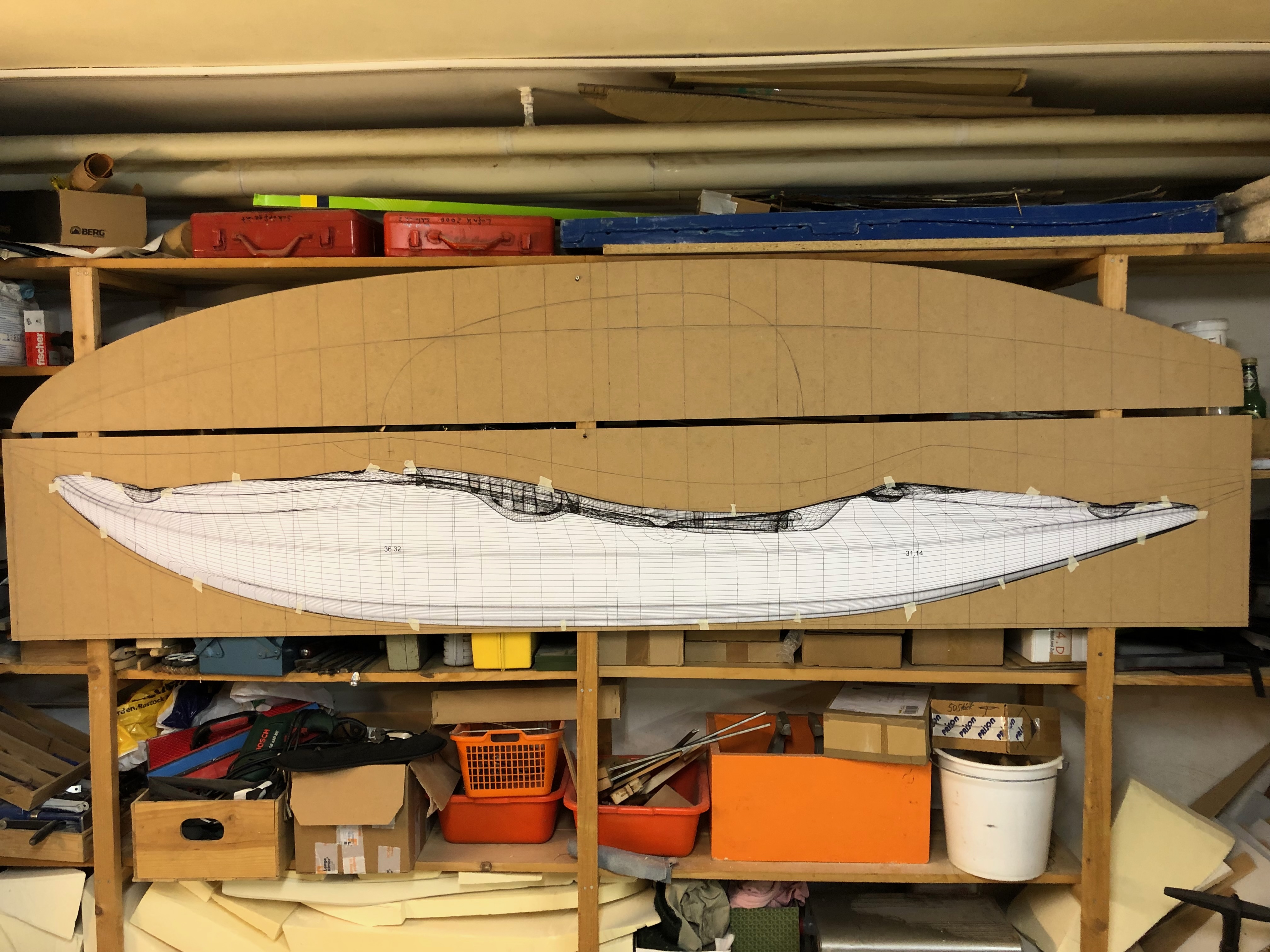
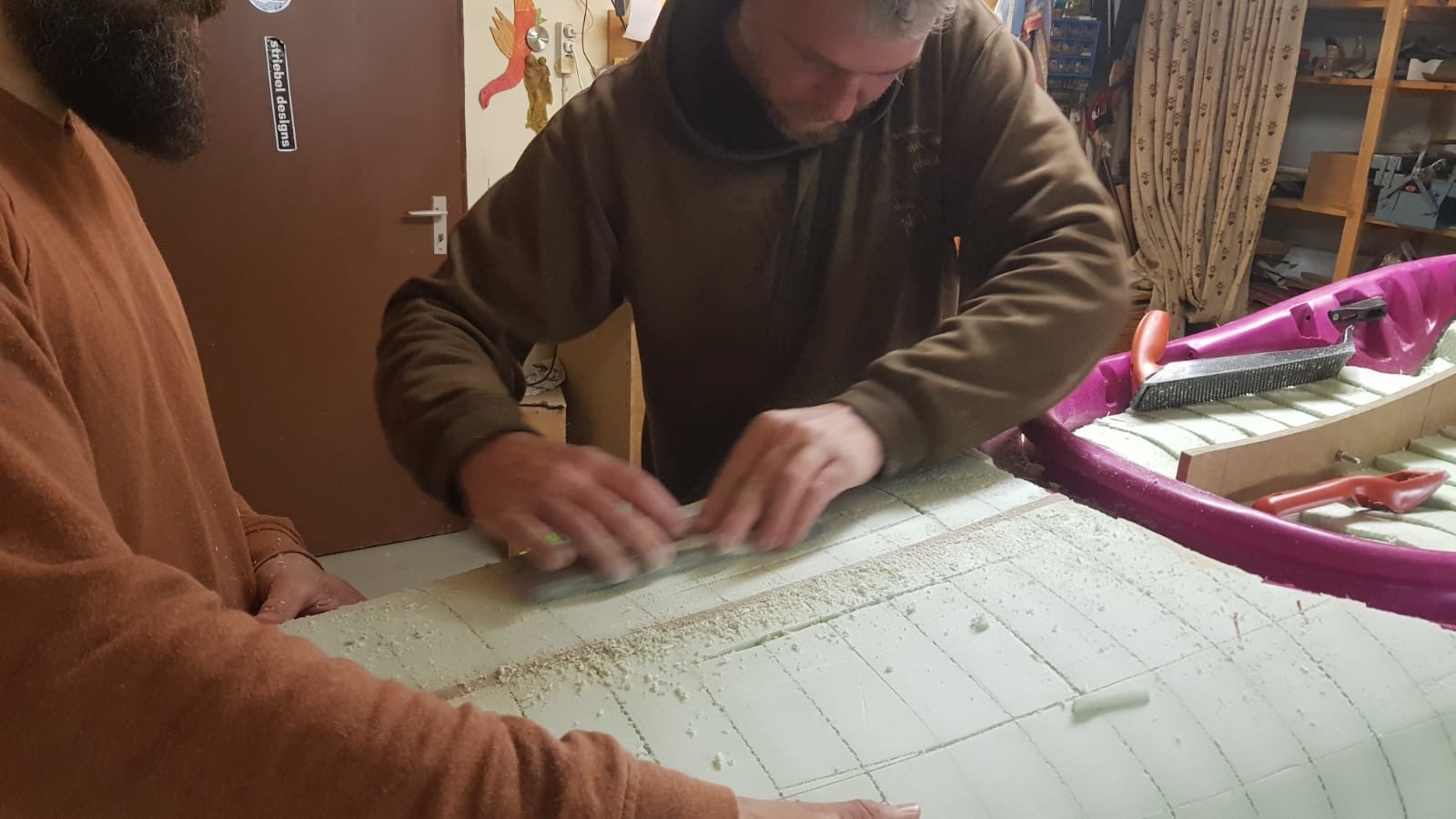
What sounds so simple isn't always easy to achieve: With the Joker, for example, a lot of lessons were learned the hard way, as the first prototypes made of foam and laminate didn't work satisfactorily. “We discussed for weeks what we had done wrong and analyzed the design. In the end, we got the boat we had envisioned.”
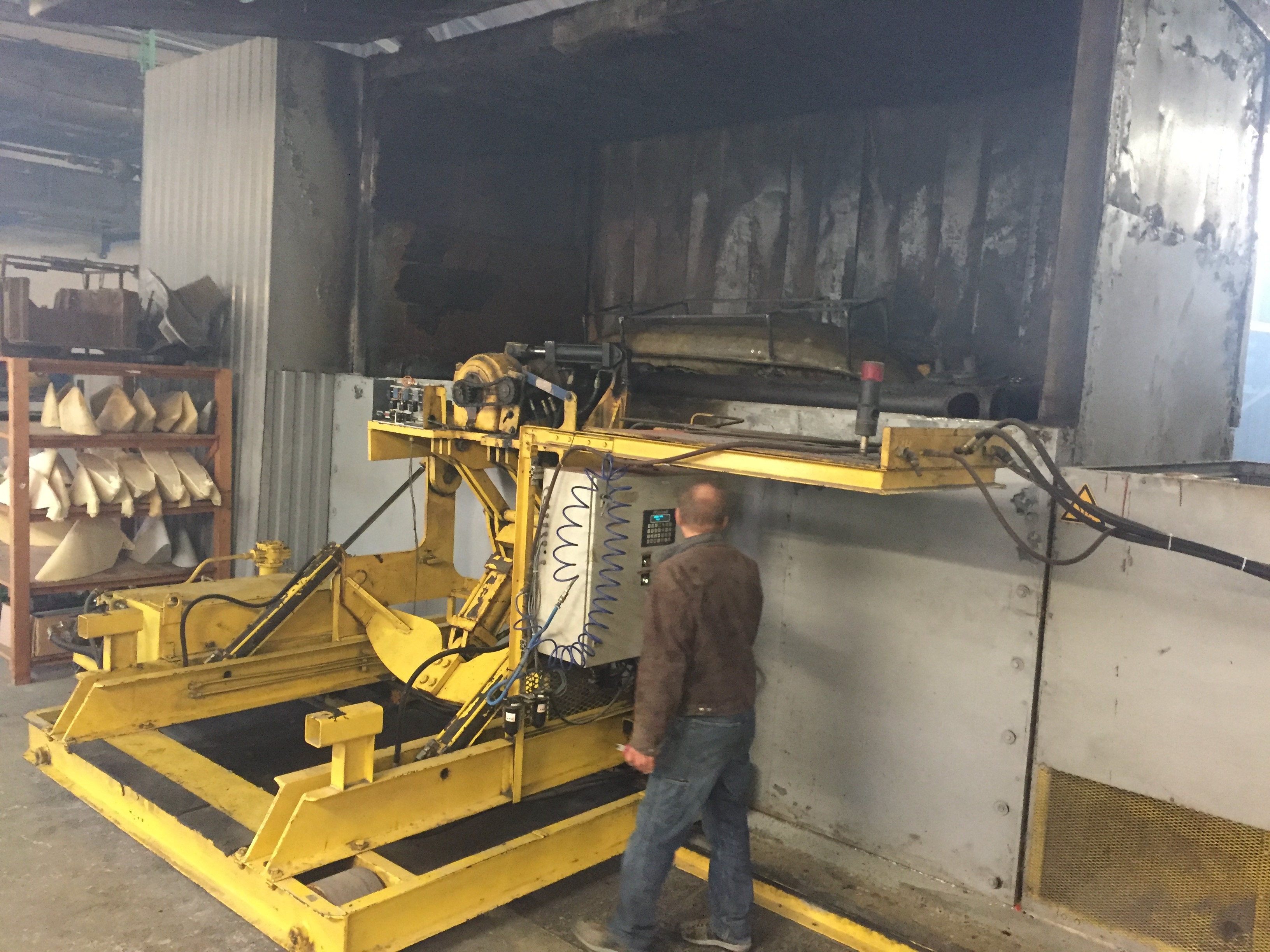
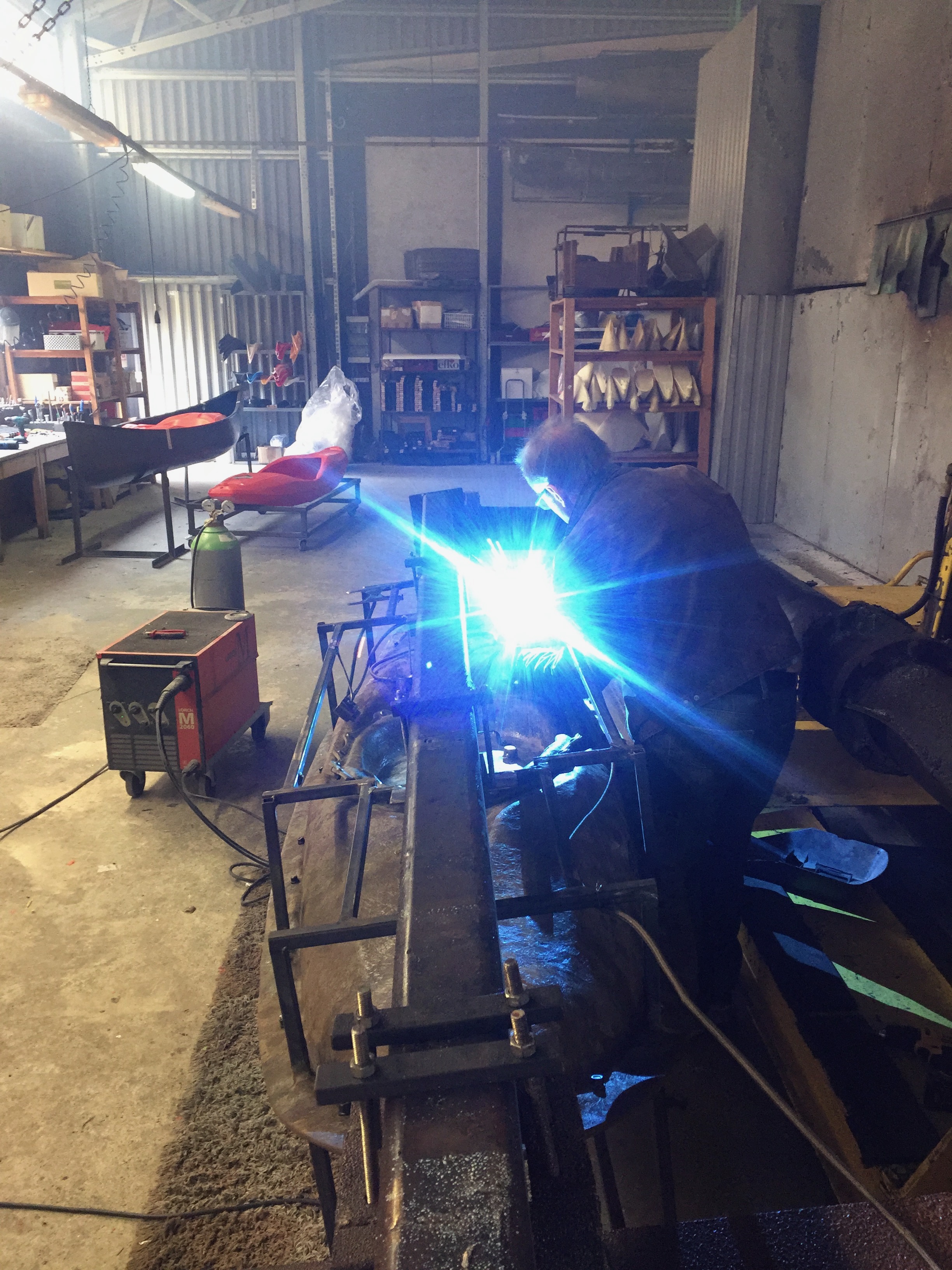
But how exactly is a polyethylene boat made? Jan Haluszka explains: The PE granulate is placed into the three-part negative mold, which consists of the hull, deck, and coaming, and then sealed. The mold is placed into a huge oven at almost 200 degrees, where it rotates – the granulate inside the mold melts and fuses together. After the negative mold has cooled, the boat is removed from the mold and later further outfitted. However, there are also differences in the rotational molding process: Spade Kayaks exclusively uses milled aluminum molds for their boats. “Although this makes manufacturing a boat more expensive than with laminated molds or cast aluminum molds, milling the aluminum allows us to better control the boat's wall thicknesses,” Haluszka elaborates. For example, more material can be added to the high-stress bottom of the kayak and less material to the deck to achieve optimal weight distribution. The boat's surfaces are also smoother, sharper edges are possible, and some cockpit fittings can be integrated directly into the boat mold.
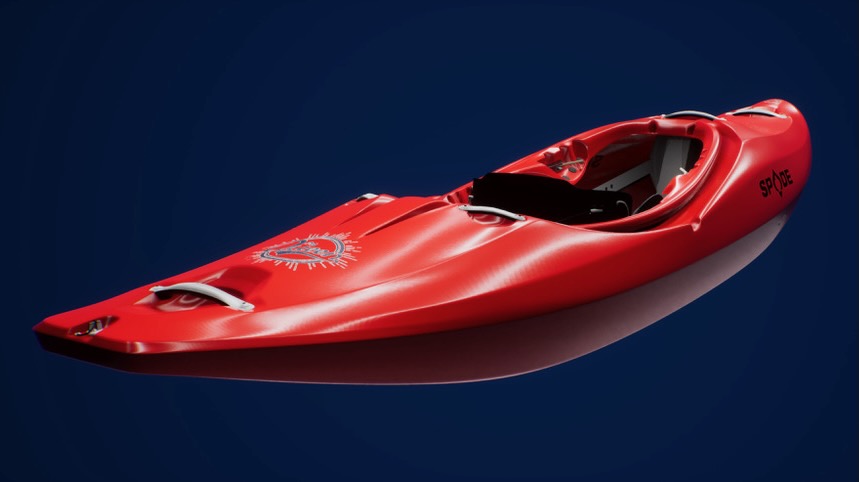
Spade now offers five boat models, ranging from a small kayak for lighter paddlers, the Queen, to playful models like the Joker and Bliss. Every cent earned still goes back into the company to develop new molds and prototypes. It certainly takes a good dose of idealism to build a whitewater company. "If you want to live out your creativity without compromise, you probably have to go through that," Brustmann confirms. Together with a designer friend, he recently created some new T-shirts for Spade. Two paddle models and a dry suit have also been added to the boat range.
"We're not running out of ideas," Mayer grins. "I'm glad we've remained friends – that's not something to take for granted."


The text up to this point was written some time ago by Jens Klatt about Spade kayaks for the DKV's Kanusport magazine.
From here on, I'll provide occasional updates on what's been happening at Spade and what's new. We now have 11 different kayak models, our paddle range has expanded, and there have been significant developments in our paddle apparel as well.
On a river!
Hans